
Septic Tank Cleaning: How Often You Need It and What Actually Happens
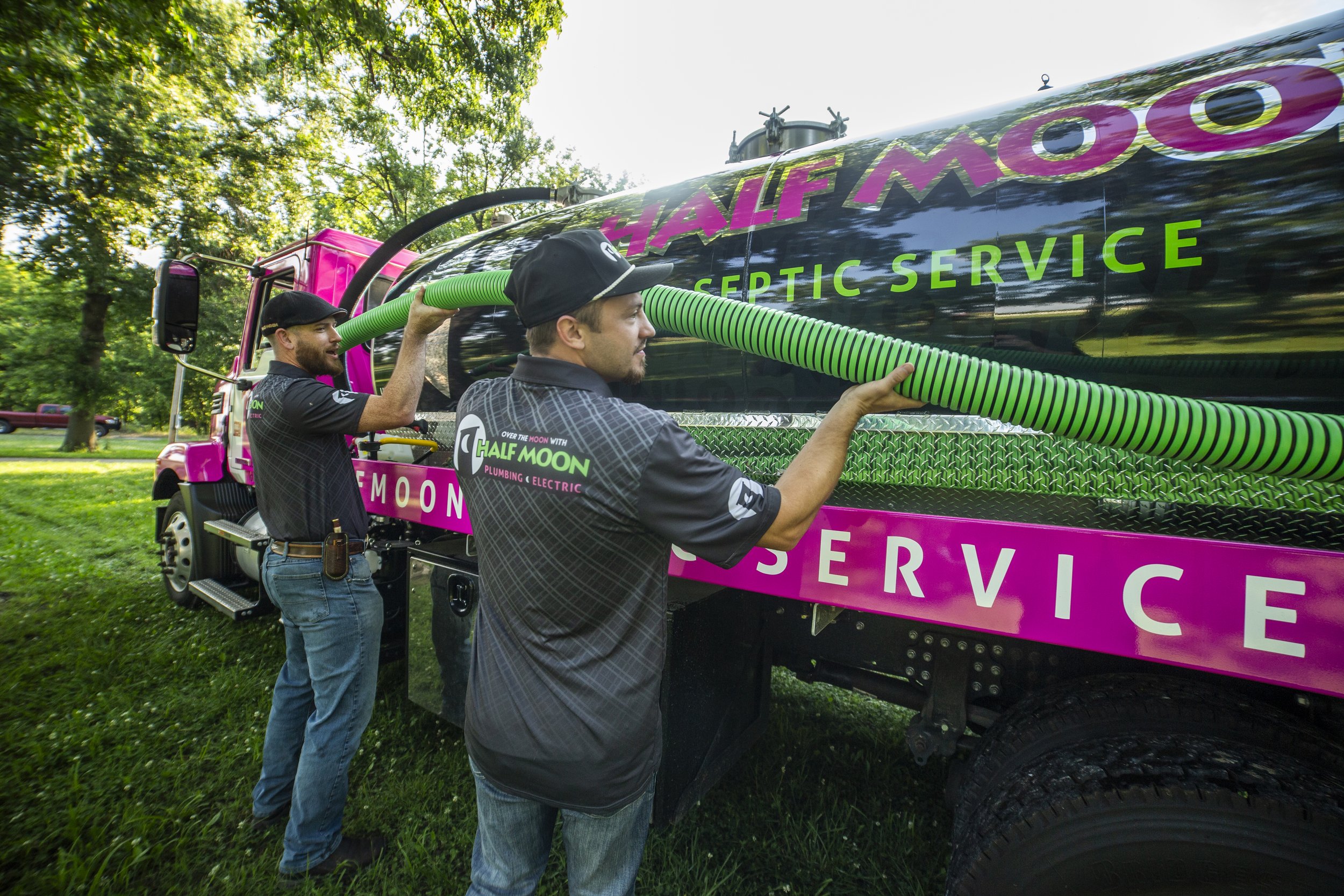
A septic tank needs cleaning every three to five years for most households. Cleaning means pumping out the layer of sludge that has settled on the bottom and the crust of scum floating on top, because those are the parts bacteria cannot break down. Skip it long enough and that material carries out into your drain field, which is the expensive half of the system. If it has been more than five years, or you cannot remember the last visit, septic tank pumping and cleaning is the single cheapest thing you can do for your system this year.
Below is what "cleaning" really means, how to set your own interval, and what the visit looks like.
Cleaning and pumping: is there a difference?
You will hear both words, and in everyday use most companies mean the same service. Technically, pumping is removing the liquid and sludge. Cleaning goes a step further and clears out the compacted material stuck to the bottom and the sides, often with a bit of water agitation, so the tank is genuinely empty rather than just drained.
What matters is that whoever services your tank removes the solids, not only the water. A tank that is drained but still has a foot of packed sludge on the floor is going to need service again far sooner than it should.
How often should a septic tank be cleaned?
Three to five years is the general rule, but the honest answer depends on four things: how big your tank is, how many people live in the house, what goes down the drains, and what type of system you have.
A 1,000 gallon tank fills faster than a 1,500 gallon tank on the same household. Two people in a three-bedroom house may stretch toward five years while six people in the same house need service every two. Garbage disposals add a lot of solids, and so do wipes, paper towels, grease, and heavy cleaning products that knock down the bacteria doing the digesting. Aerobic systems run on their own maintenance cadence and get looked at more often than a conventional tank.
Rough starting points for a conventional tank with normal use:
1 to 2 people: every 4 to 5 years
3 to 4 people: every 3 to 4 years
5 to 6 people: every 2 to 3 years
Any household with a garbage disposal in daily use: shorten by about a year
The right way to settle it is to have the sludge level measured at your next service. Once you know how fast your particular tank fills, you have a real schedule instead of a guess.
Signs you are overdue
Waiting for symptoms is not the plan, but these are the ones to act on:
Slow drains or gurgling across multiple fixtures, not just one
Sewage odor indoors near drains, or outdoors near the tank
Wet ground or unusually lush grass over the tank or drain field
Toilets that back up, especially after heavy water use
The last service was more than five years ago, or you do not know
Any two of those together is worth a call. Backups that come back within a couple weeks of a pumping usually point at the drain field instead, and that needs a septic inspection rather than another pumping.
What happens during a septic tank cleaning

The technician starts by locating and opening the tank. If your lids are buried, this is the step that takes the longest, which is why risers are worth adding while the crew is already there.
Before anything comes out, sludge and scum depths get measured. That reading is what sets your next interval, and it is the most useful number you will get all day.
Then the pumping itself. A vacuum hose from the truck pulls out liquid, sludge, and scum. The tank is emptied fully rather than partially, because leaving a starter layer behind is a myth. Plenty of bacteria stay in the tank walls and in the incoming flow. Water is used along the way to loosen whatever has hardened on the bottom and sides so it can be drawn out too.
With the tank open, the technician checks the baffles, tees, and effluent filter. Baffles keep scum from escaping into the drain field, and a broken one is a common, quiet cause of field failure. Filters get rinsed or replaced.
The material is hauled to an approved treatment facility, and you get a record of what was found, what came out, and when to schedule next. Start to finish, a straightforward residential cleaning usually runs under two hours.
What it costs, honestly
Price moves with tank size, how much is in it, how accessible the lids are, and whether anything needs repair once the tank is open. Tanks that have not been serviced in a decade cost more because there is more to remove and it is harder to remove. Buried lids that need digging add labor.
The cheapest possible pumping is the one that happens on schedule, on a tank with lids at the surface. Everything expensive about septic comes from waiting.
How to stretch the interval without risking the system
Keep wipes, paper towels, feminine products, cat litter, and grease out of the drains. Use the garbage disposal sparingly. Fix running toilets. Spread laundry across the week instead of doing eight loads on Saturday. Skip the additive products that promise you never have to pump, because nothing dissolves inorganic solids, and the tank still fills.
Frequently asked questions
How often should a septic tank be cleaned? Every three to five years for most households. Larger families, smaller tanks, and daily garbage disposal use push it toward every two to three years. Have the sludge level measured at your next service to set an accurate interval for your home.
How do I know when my septic tank needs cleaning? Slow drains across the house, gurgling, odor near the tank, wet or unusually green grass over the tank, or backups. Also simply time. If it has been more than five years, it is due regardless of symptoms.
Should the tank be pumped completely empty? Yes. Leaving sludge behind does not help the bacteria and only shortens the time until the next service. Bacteria repopulate quickly from the tank surfaces and incoming wastewater.
Can I clean my own septic tank? No. It requires vacuum equipment, and the waste has to be hauled to a licensed treatment facility. Septic gases in a tank are also genuinely dangerous to breathe. This is a job for a licensed crew.
Does a garbage disposal really change how often I need service? Yes, noticeably. Food solids do not break down the way waste does, and a household using the disposal daily can add a full year of buildup compared to one that does not.
Get on a schedule instead of waiting for a backup
If you are not sure when your tank was last serviced, that is reason enough to have it checked. Half Moon Plumbing and Electric cleans, inspects, and repairs septic systems across the Tulsa area, and we will tell you where your levels actually sit before recommending anything. See the full list on our septic services page.
Call Now: 918-205-2487 Book Online: schedule your septic tank cleaning in a couple of clicks.