
Drain Field Problems: Signs, Causes, and What Repair Really Involves
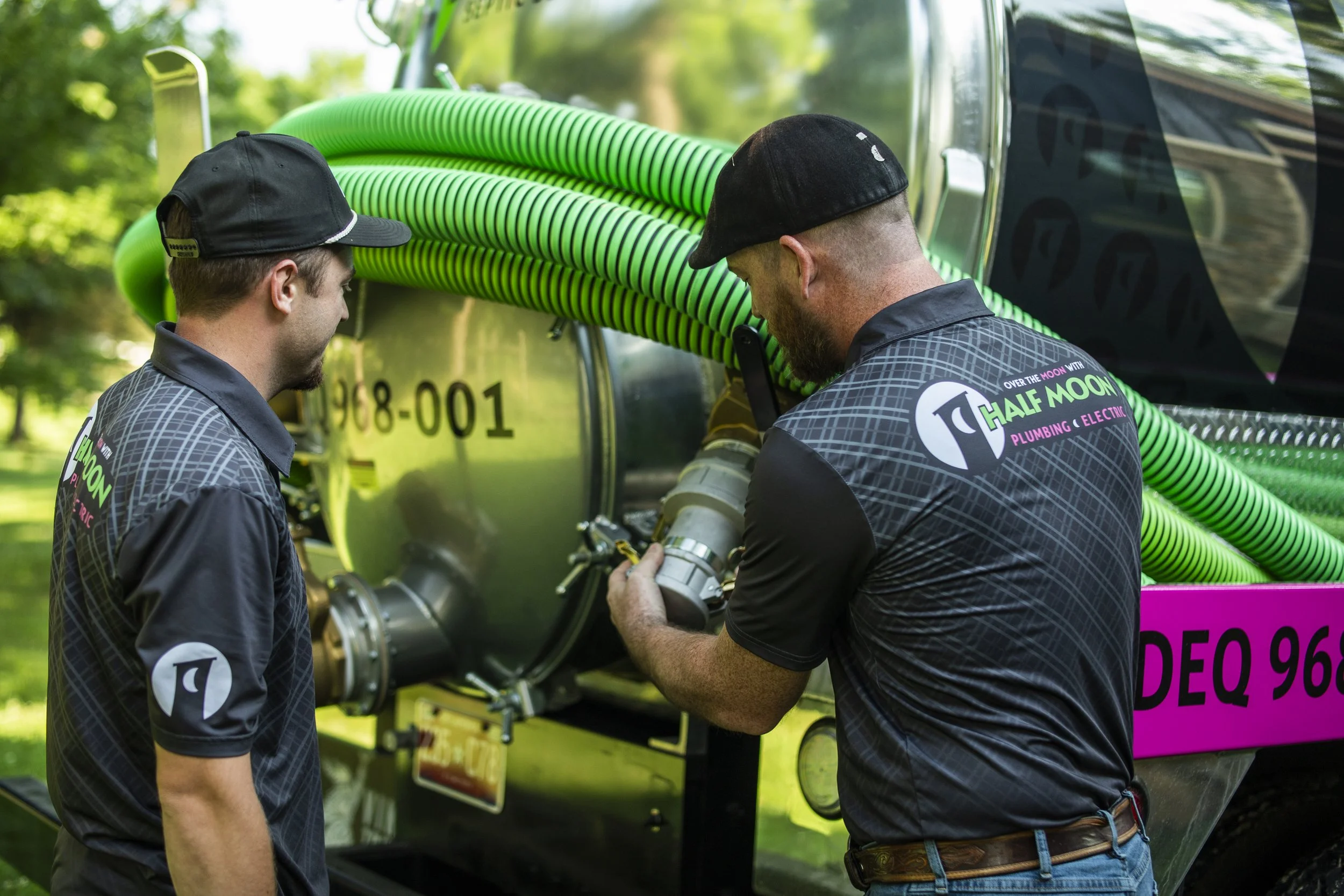
If your drains are slow, your yard has a wet spot that never dries, and there is a faint sewage smell outside, the problem is usually the drain field rather than the tank. That is the part of your septic system that quietly does most of the work, and when it stops absorbing water, everything upstream of it backs up. A septic system inspection is what tells you whether you are looking at a simple fix or a full replacement, because the symptoms of both look almost identical from the driveway.
Here is what the drain field does, what breaks it, and what your realistic options are once it starts to fail.
What a drain field actually does
Your septic tank does not get rid of wastewater. It separates it. Solids sink, grease floats, and the liquid in the middle, called effluent, flows out to the drain field.
The drain field, sometimes called a leach field or lateral lines, is a set of perforated pipes buried in gravel trenches. Effluent seeps out of those pipes, filters down through the gravel and soil, and the soil finishes cleaning it before it rejoins the groundwater. The soil is the filter. Everything about drain field health comes back to whether that soil can still take on water.
Signs your drain field is failing
Standing water or soggy ground over the field. The clearest sign. If one section of yard stays wet days after the last rain, effluent is surfacing instead of soaking in.
Grass that is greener and taller over the lines. Effluent is fertilizer. When you can see the trench pattern in your lawn as bright green stripes, the field is releasing more nutrients near the surface than it should.
Slow drains and gurgling throughout the house. Not one slow sink, but every fixture. If the field cannot take water, the tank backs up, and the house backs up after it.
Sewage odor outdoors. A healthy field does not smell. Odor near the trenches means effluent is reaching the surface.
Backups that return quickly after a pumping. This one matters. Pumping empties the tank and buys a few days of relief. If the trouble comes back within a week or two, the tank was never the problem.
If you are seeing several of these together, stop putting water into the system where you can and get eyes on it. A field that is struggling can often be saved. A field that has been pushed hard for another six months usually cannot.
What causes a drain field to fail
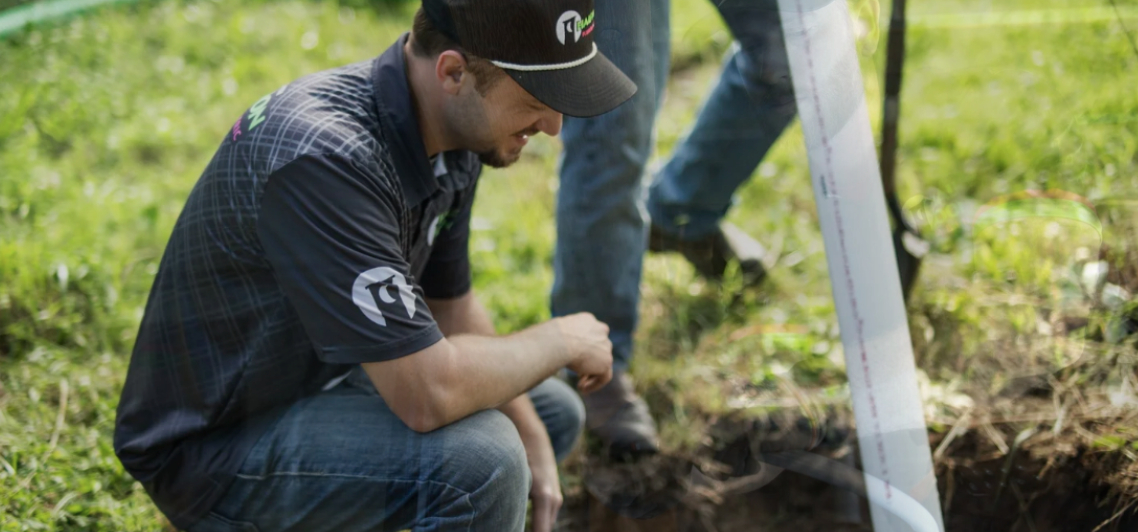
Skipped pumping is the most common cause we see, and the most preventable one. When the tank gets too full, solids and grease carry out into the trenches and coat the soil. Once that layer forms, water stops passing through it. Routine septic tank pumping and cleaning exists specifically to keep that from happening.
Too much water too fast will do it as well. Long laundry days, a leaking toilet flapper, or a house with more people in it than the system was sized for all keep the field saturated, and it needs time between doses to drain and re-aerate.
Then there is everything that happens on top of the field. Driving or parking over it crushes the gravel and squeezes the air out of the soil, which we see a lot with RVs, trailers, and contractor trucks during a remodel. Trees and large shrubs send roots straight toward the water, find the perforations, and grow into the lines.
Age plays a part too. Even a well-run field has a service life. Around the Tulsa area we see fields last roughly 20 to 30 years, though the heavy clay common in parts of Rogers and Wagoner counties drains slower and can shorten that. And anything that does not break down, whether it is wipes or grease, eventually reaches the trenches and stays there.
Can a drain field be repaired, or does it have to be replaced?
Both are real options, and which one applies depends on how far the soil has gone.
Repairs work when the field itself is still viable. That covers clearing a blocked or collapsed line, replacing a failed distribution box, cutting out invasive roots, fixing a broken pipe between the tank and the trenches, or correcting drainage that is sending surface water onto the field. Jetting the laterals can also restore flow when the pipes are fouled but the surrounding soil is still healthy.
Replacement is the honest answer once the soil has sealed off. A biomat layer that has fully clogged the trench walls does not get unclogged. At that point the fix is new trenches, usually in a different part of the yard, sized and permitted for the home. That means a soil evaluation, a design, and county health department permitting in Oklahoma.
We would rather tell you your field has a few good years left with a repair than sell you a replacement you do not need. We would also rather tell you plainly that a field is done than take your money for a repair that buys three weeks.
How to protect the field you have
Pump on schedule, usually every three to five years for a typical household, and more often if the house runs hard. Spread laundry across the week. Fix running toilets quickly, since a single one can put hundreds of gallons a day into the system. Keep vehicles, sheds, and above-ground pools off the field. Plant grass over it and keep trees well back. Route gutter downspouts and any sump discharge away from the trenches, because rainwater does not belong in a system already handling household flow.
None of that is complicated. It is just easy to forget until something surfaces in the yard.
Frequently asked questions
How much does drain field repair cost? It depends entirely on what is wrong. Clearing a line or replacing a distribution box sits at the low end. A full replacement involves soil testing, design, permitting, and excavation, and is a significantly larger project. We look at the system before quoting rather than giving a number over the phone that turns out to be wrong.
How long does a septic drain field last? Commonly 20 to 30 years with regular pumping and reasonable water use. Heavy clay soil, skipped maintenance, or a system undersized for the household can cut that down considerably.
Can I just add a chemical treatment to fix my drain field? No. Additives cannot remove the compacted biomat layer sealing the trench walls, and some products can actually push solids further into the field. Pumping and physical repair are what work.
Will pumping the tank fix a failing drain field? Pumping relieves the symptoms for a short time, which is useful in an emergency. It does not restore a field. If backups return within a couple of weeks of a pumping, the field needs to be evaluated.
Do I need a permit to replace a drain field in Oklahoma? Yes. New or replacement absorption fields require a soil profile evaluation, an approved design, and a permit through the state and county process. We handle that side of it so you are not chasing paperwork.
Not sure whether it is the tank or the field?
That is the right question to ask, and it is the one worth answering before you spend money. Half Moon Plumbing and Electric handles septic inspection, pumping, and repair across the Tulsa area, and we will tell you straight what your system needs. See everything we do on our septic services page.
Call Now: 918-205-2487 Book Online: schedule your septic service in a couple of clicks.