
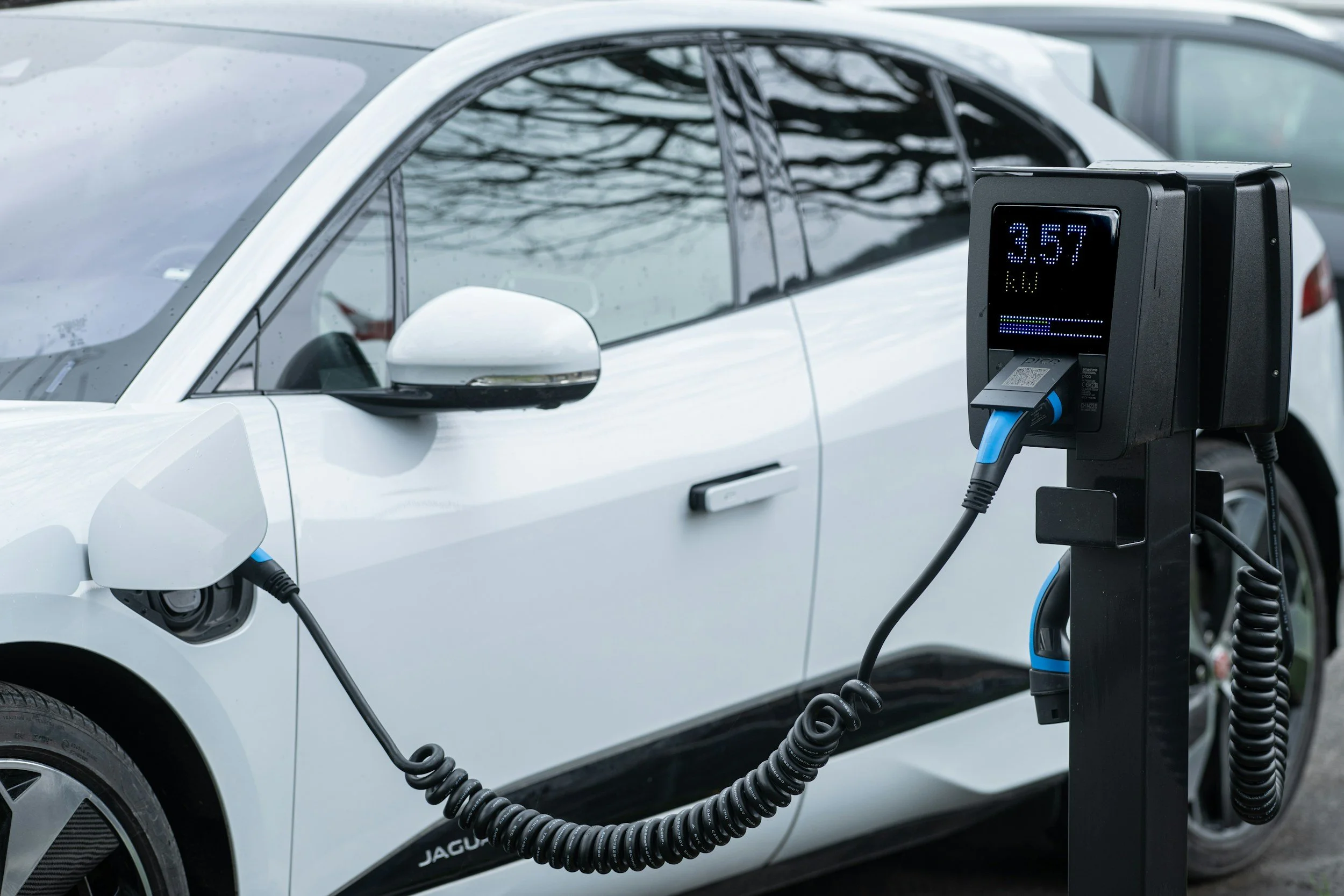
Bringing home an electric vehicle raises a practical question fast: how are you going to charge it, and what will the setup cost?
For most homes the answer is a Level 2 charger on a dedicated 240-volt circuit.
National cost guides commonly put a straightforward Level 2 install somewhere around $1,000 to $2,500 including the charger, with costs climbing if your electrical panel needs work.
Our EV charger installation team can tell you which side of that range your house falls on after one visit.
Here is what you are choosing between and what changes the price.
Level 1 vs. Level 2 home charging
Level 1 uses a regular 120-volt household outlet and the cord that comes with most EVs. It costs nothing extra to set up. It is also slow, often adding only a few miles of range per hour. If you drive short distances and can leave the car plugged in overnight, some people get by on it.
Level 2 runs on 240 volts, the same kind of circuit that powers a dryer or range. It charges several times faster than Level 1, enough to fully recharge most EVs overnight. For anyone who drives daily or has more than one EV, this is the setup that makes sense.
Hardwired charger or a 240-volt outlet?
You can install a Level 2 charger two ways.
A hardwired charger connects directly to the circuit. It allows higher charging speeds on some models, is the cleaner option outdoors, and avoids wear on an outlet.
A 240-volt outlet (usually a NEMA 14-50) lets you plug in a portable Level 2 charger. It is flexible if you move the charger between homes or vehicles. The outlet and circuit still need to be installed correctly and sized for continuous use, since an EV pulls a heavy load for hours at a time.
Either way, it is a job for a licensed electrician on a dedicated circuit, not an extension cord or a shared outlet.
What affects EV charger installation cost
The charger itself. Level 2 units vary in price based on amperage, smart features, and brand.
Charging speed and circuit size. A 32-amp charger typically needs a 40-amp circuit. A 48-amp charger typically needs a 60-amp circuit. Bigger circuit, heavier wire, higher cost.
Distance from the panel. A charger on the other side of the garage wall from the panel is a short run. A charger at the end of a driveway or in a detached garage means longer wire runs and sometimes trenching.
Panel capacity. This is the one that surprises people. Older homes, or homes that already run electric heat, a hot tub, and a big AC unit, may not have room for another 40 or 60 amps. Options include an electrical panel upgrade or a load management device that keeps the charger from overloading the service.
Indoor vs. outdoor. Outdoor installs need weather-rated equipment and mounting.
Permits. An EV circuit is new electrical work and usually requires a permit and inspection.
Questions to answer before you buy a charger
What is the charging rate your car can actually accept? Buying a 48-amp charger for a car that only takes 32 amps spends money for nothing. Do you have one EV or two, now or soon? Where do you park? And does your utility currently offer any rebate or time-of-use rate for EV charging? Rates and programs change, so check with them directly.
It also helps to have the panel looked at before you buy anything. That one visit tells you whether you are looking at a simple install or a panel conversation. Book that visit online before the car arrives and you will know what you are working with.
Frequently asked questions
How much does it cost to install a Level 2 EV charger at home?
National cost guides commonly put a straightforward install, including the charger, around $1,000 to $2,500. A long wire run, outdoor install, or panel upgrade can raise it.
Do I need a permit to install an EV charger?
Usually, yes. It is new electrical work. A licensed electrician should pull the permit and have it inspected.
Can I install an EV charger myself?
Plugging a portable charger into an existing 240-volt outlet is simple. Installing the circuit, outlet, or a hardwired charger is electrical work that should be done by a licensed electrician.
Will an EV charger raise my electric bill?
Yes, you are moving fuel costs to your electric bill. Charging overnight on a time-of-use rate, if your utility offers one, can lower the cost.
Do I need a panel upgrade for an EV charger?
Not always. It depends on the size of your service and what else is already on it. A load calculation answers it.
Ready to charge at home?
Half Moon Plumbing and Electric is a licensed electrical contractor (Lic# 00140295) installing home EV chargers across Tulsa, Owasso, Broken Arrow, and nearby towns. We will check your panel, recommend the right setup for your car, and give you upfront pricing with options. See all of our electrical services.
Book Online: schedule your EV charger assessment.
Call Now: 918-205-2487 with questions about your car or your panel.