
How Often Should You Pump Your Septic Tank?
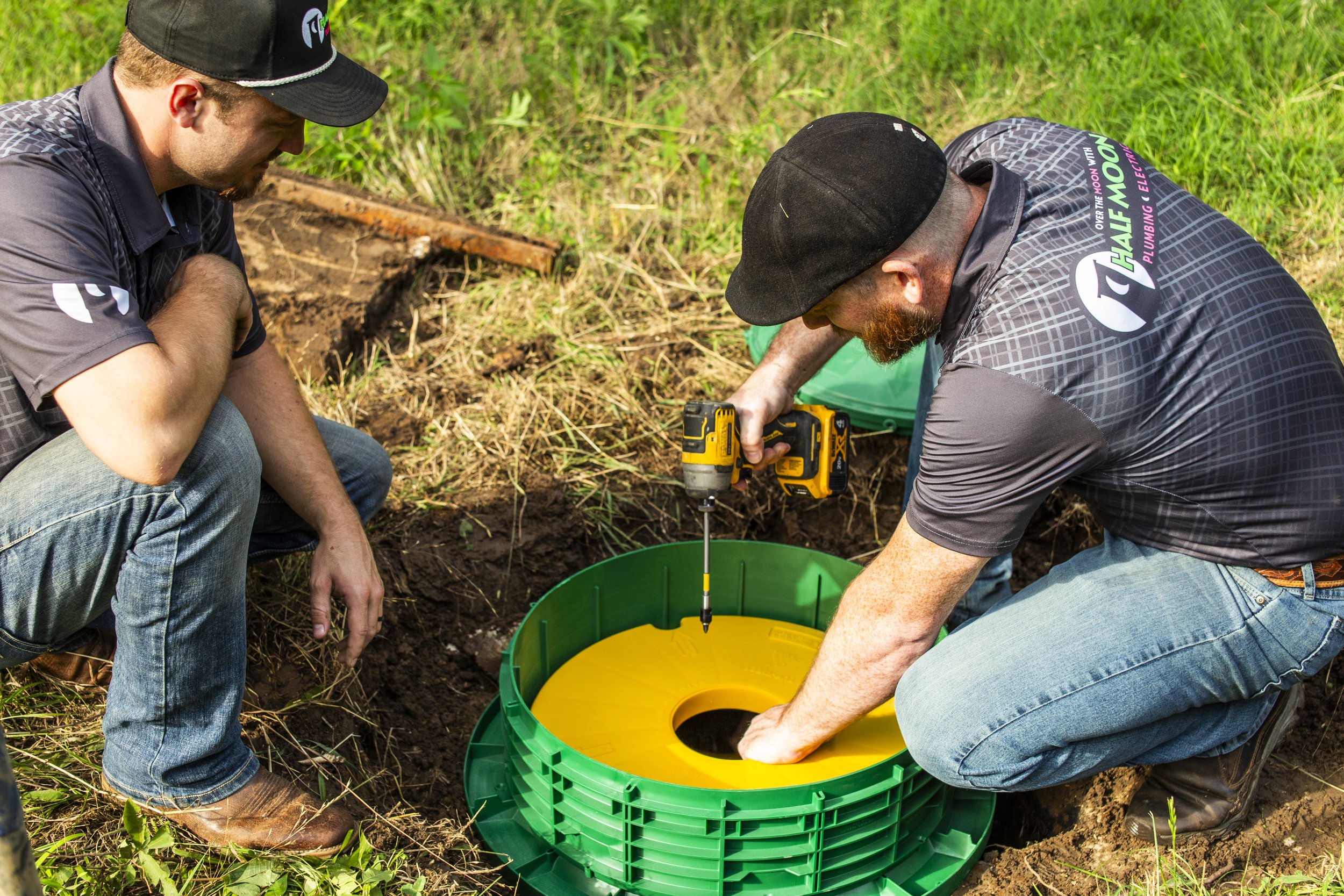
Every three to five years for most homes. That is the short answer, and for a lot of Tulsa-area households it is close enough to right.
But the interval that actually protects your system depends on your tank size, how many people live in the house, and what goes down your drains.
Get it wrong in the long direction and solids escape into the drain field, which turns a routine septic tank pumping into a five-figure repair.
Here is how to work out your own number instead of guessing.
Why the tank has to be pumped at all
Bacteria in the tank digest a good portion of what arrives, but not all of it. What is left settles into two layers: sludge on the bottom and a scum crust on top. Neither one breaks down further. They just accumulate.
The tank is designed to hold that buildup and still leave a clear middle layer of liquid that flows out to the drain field. Once sludge and scum take up too much of the tank, that clear zone shrinks, and solids start riding out with the effluent. Those solids coat the soil in your trenches and seal it. Pumping is how you keep that from happening. It is the entire reason the schedule exists.
Find your interval
Start with household size and tank size. For a conventional tank with normal use:
People in the home. 1,000 gallon tank. 1,250 gallon tank 1,500 gallon tank
1 to 2 every 4 to 5 years every 5 years every 5+ years
3 to 4 every 2 to 3 years every 3 to 4 years every 4 years
5 to 6 every 1 to 2 years every 2 years every 2 to 3 years
Then adjust for how you live. Shorten the interval by roughly a year if any of these apply:
A garbage disposal used most days
Frequent guests, a home business, or a rental with turnover
Heavy laundry volume, or a water softener discharging into the septic system
Regular use of bleach or antibacterial cleaners in quantity, which suppress the bacteria doing the digesting
Lengthen it cautiously if the house is occupied part of the year, if it is one or two low-water users, or if you have had a sludge measurement showing the tank is filling slowly.
If you have an aerobic system, ignore the table. Aerobic units run on a different maintenance rhythm with routine service checks on the aerator, chlorinator, and pump, plus pumping when the sludge warrants it. That is covered under aerobic septic system maintenance.
The only way to know for certain
Have the sludge and scum depths measured. Any septic technician can do this in a few minutes with a clear tube or a sludge judge. The working rule of thumb: when solids fill about a third of the tank's depth, it is time.
Once you have one measurement and know when the tank was last emptied, you can calculate how fast your tank fills. That gives you a real schedule, specific to your house, instead of a national average. It is the cheapest piece of information in the whole septic world and almost nobody asks for it.
Signs you are already overdue
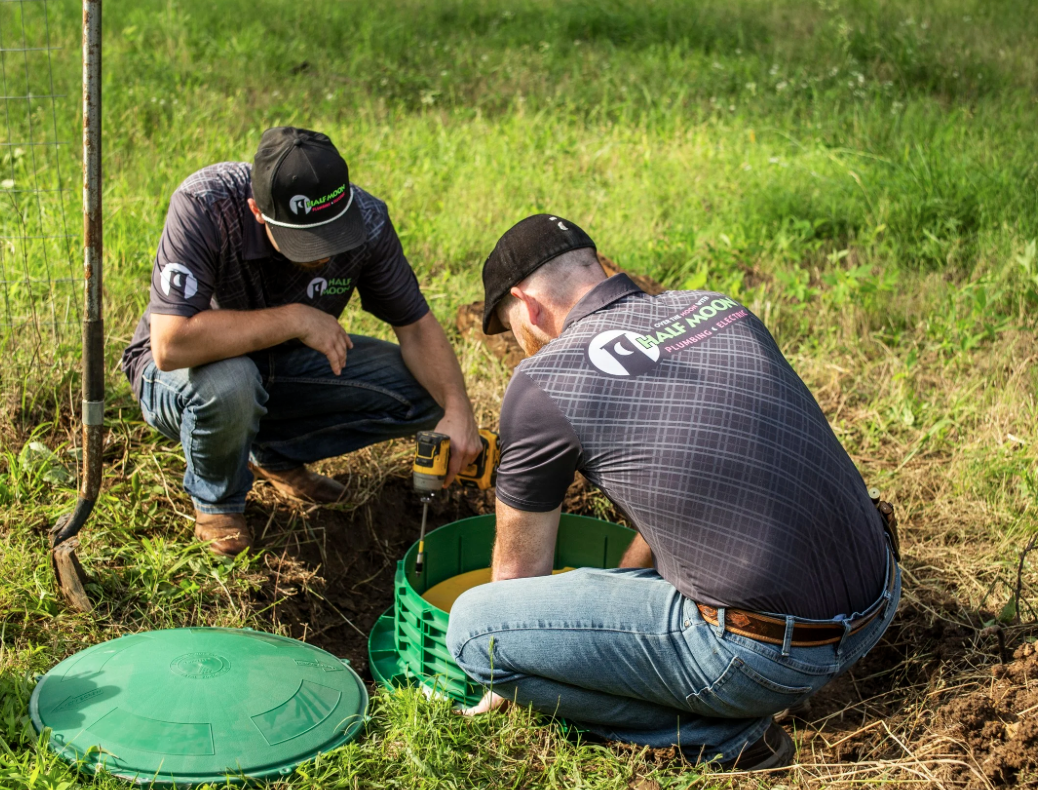
Slow drains or gurgling in more than one fixture
Sewage odor near the tank, the drains, or the drain field
Wet ground or a strip of unusually green grass over the tank or trenches
Toilets backing up, especially after laundry or several showers
You genuinely do not know when it was last pumped
That last one counts. Around here, plenty of homes come with a tank the previous owner never mentioned. If you bought the place and no service record came with it, assume it is due.
What happens if you wait too long
The sequence is predictable. Solids escape the tank. They reach the drain field and form a layer over the trench soil that water will not pass through. The field stops absorbing. Wastewater has nowhere to go, so it surfaces in the yard or backs into the house.
At that point pumping the tank buys a few days and nothing more. The repair is new trenches, which means soil testing, a design, county permitting, and excavation. We see it every year, and in nearly every case the homeowner had gone eight or ten years without a pumping that would have cost a fraction of the repair.
Habits that stretch the interval
Keep wipes, paper towels, hygiene products, cat litter, coffee grounds, and grease out of the system. Go easy on the garbage disposal. Fix running toilets quickly, since one can add hundreds of gallons a day. Spread laundry across the week so the tank and field are not slammed at once. Keep vehicles off the drain field. Skip additives that claim you will never need pumping again, because nothing in a bottle removes inorganic solids.
Frequently asked questions
How often should a septic tank be pumped for a family of four? Usually every three to four years with a 1,250 or 1,500 gallon tank, and closer to every two to three years with a 1,000 gallon tank or daily garbage disposal use.
How often should a septic tank be pumped for two people? Often every four to five years, sometimes longer with a larger tank and light water use. Have the sludge level checked once to confirm before stretching past five.
Does the tank need to be pumped if nothing seems wrong? Yes. By the time symptoms appear, solids have usually already reached the drain field. Scheduled pumping is preventive, the same way an oil change is.
Do septic tank additives reduce how often I need pumping? No. Bacteria are already present in the tank. Additives cannot break down the inorganic material that makes up the sludge layer, and some products can push solids out into the field.
How long does a septic tank pumping take? A typical residential pumping runs about an hour to two hours, longer if the lids are buried and have to be located and dug up first.
Put it on the calendar
If you cannot remember your last pumping, that is your answer. Half Moon Plumbing and Electric services septic systems across the Tulsa area, and we will measure your levels and give you a real interval rather than a stock number. Everything we handle is on our septic services page.
Call Now: 918-205-2487 Book Online: schedule your septic pumping in a couple of clicks.