

Rewiring a whole house is a big project, and the cost question is a fair one to ask before anybody opens a wall.
National cost guides commonly put a full rewire somewhere around $6 to $10 per square foot, which works out to roughly $8,000 to $13,000 for a smaller home and $15,000 to $25,000 for a larger one. Your number depends on things you cannot see from the outside, which is why a walk-through with a licensed electrician matters.
If you are weighing a whole-home rewiring project, here is what drives the price and how to tell whether you need it at all.
What drives the cost of rewiring a house
Square footage and number of circuits. More rooms means more wire, more outlets, more switches, and more hours.
How easy it is to get to the walls. A house with an open attic and a crawlspace is much easier to rewire than a slab home with finished ceilings. Electricians fish new wire through walls wherever they can, but some access holes are unavoidable. Plaster walls, common in older Tulsa homes, take more care to open and patch than drywall.
The age of the house and what is behind the walls. Knob-and-tube wiring from the early 1900s, cloth-insulated wire from mid-century homes, and aluminum branch wiring from the late 1960s and early 1970s each come with their own work. If aluminum is the main issue, aluminum wiring replacement may be a narrower fix than a full rewire.
The electrical panel. Older houses often have a panel that is too small or outdated for modern loads. A rewire is a natural time to do an electrical panel upgrade, and that adds to the total.
Code updates. New circuits have to meet current code, which can mean GFCI and AFCI protection, additional kitchen and bathroom circuits, and grounded outlets throughout.
Permits and wall repair. Permits and inspections are part of doing it right. Ask whether patching and painting is included or whether you will need a separate drywall crew.
Full rewire vs. partial rewire
Not every older house needs every wire replaced. Sometimes the problem is one part of the home, an addition that was wired badly, or a few circuits that were never grounded.
A partial rewire costs less and disrupts less of the house. A full rewire makes sense when the original wiring is unsafe throughout, when insurance is pushing for it, or when you are already remodeling and the walls are open anyway. That last one is worth thinking about. If you are gutting a kitchen or bathroom, rewiring those rooms while they are open is far cheaper than coming back later.
Signs your house may need rewiring
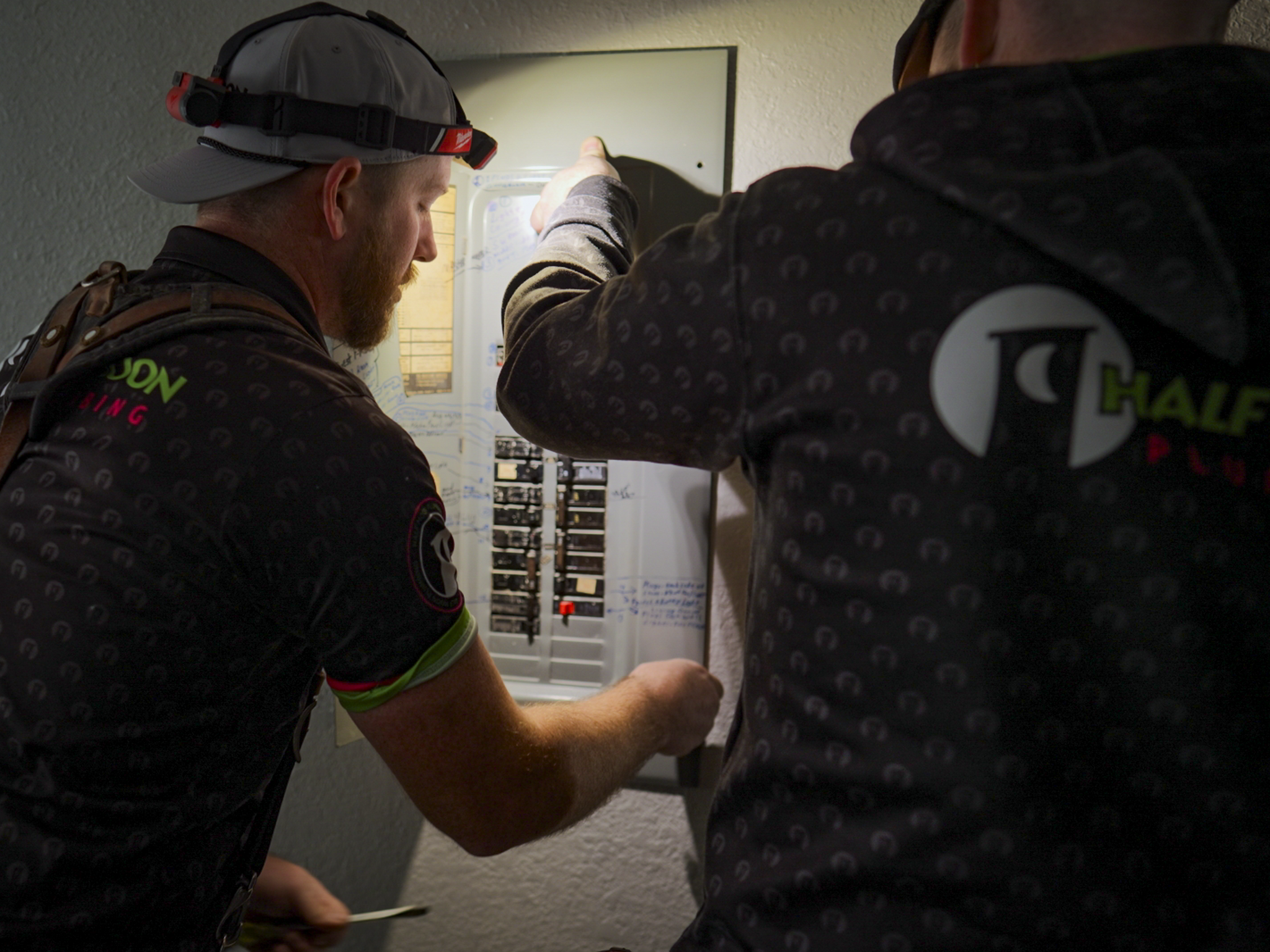
Breakers that trip often. Lights that flicker or dim when appliances run. Outlets or switch plates that feel warm.
A faint burning smell. Two-prong outlets throughout the house. Scorch marks around outlets. Any knob-and-tube or cloth-wrapped wire you can see in the attic or basement.
And a house over 40 or 50 years old that has never had its wiring looked at.
If you are not sure, start with an electrical safety inspection. It costs a fraction of a rewire and tells you exactly what you are dealing with before you budget for anything. You can schedule one online at a time that suits you.
How long does rewiring take?
A partial rewire may take a day or two. A full rewire on an average-size home commonly takes several days to a couple of weeks, depending on access and how much patching is needed. You can usually stay in the house, though you will lose power to parts of it during the day.
How to get an honest quote
Ask for the scope in writing: full or partial, panel included or not, how many circuits, permit included, and who handles wall repair. Ask what they found and why they recommend it. A good electrician will show you the problem before naming a price.
We give upfront pricing with options before any work starts. Sometimes the right answer is a full rewire. Sometimes it is fixing three circuits and leaving the rest alone, and we will tell you which.
Frequently asked questions
How much does it cost to rewire a 1,500-square-foot house?
Using the common national range of $6 to $10 per square foot, roughly $9,000 to $15,000. Access, age, panel work, and wall repair move it up or down.
Is it worth rewiring an old house?
If the wiring is unsafe, yes. Outdated wiring is a fire risk, can make insurance harder to get, and may not handle modern appliances and electronics. A safety inspection will tell you whether you need a full rewire or a smaller repair.
Can you rewire a house without removing drywall?
Mostly. Electricians fish new wire through existing walls using attic and crawlspace access, with small openings where needed. Some patching is usually part of the job.
Does homeowners insurance cover rewiring?
Usually not as routine maintenance, but some insurers will require updates to knob-and-tube or aluminum wiring before they will write or renew a policy. Check with your agent.
How long does house wiring last?
Modern copper wiring can last for decades. The bigger issue in older homes is the insulation around the wire, outdated connections, and circuits that were never designed for today's loads.
Thinking about rewiring?
Half Moon Plumbing and Electric is a licensed electrical contractor (Lic# 00140295) serving Tulsa, Owasso, Broken Arrow, and the surrounding area. We will walk the house, show you what we find, and give you options. See our full list of electrical services.
Book Online: schedule a rewiring assessment.
Call Now: 918-205-2487 if you are seeing warm outlets, burning smells, or sparks. Those should not wait.